Nurses know a secret about thermometers that the gadget aisle would rather you didn’t: the fancier and faster the device, the further it usually sits from the truth. The accuracy hierarchy hasn’t changed — core measurements first, oral electronic next, then tympanic, and the beloved no-touch forehead gun trailing the pack as a screening tool, not a measuring one.
That doesn’t make no-touch useless — post-COVID, it’s how the world triages — it just means a good home kit is really two thermometers: something fast for screening, something accurate for deciding. This 2026 update picks the best of both, with the clinical honesty a nursing site owes you.
The Best Thermometers in 2026
- iHealth PT3 — Best No-Touch
- Braun ThermoScan 7 — Best Ear (The Clinic Classic)
- Vicks SpeedRead — Best Accuracy per Dollar
- Exergen TAT-2000C+ — Best Temporal Artery
- Kinsa QuickCare — Best Smart Thermometer
iHealth PT3 – Best No-Touch Thermometer
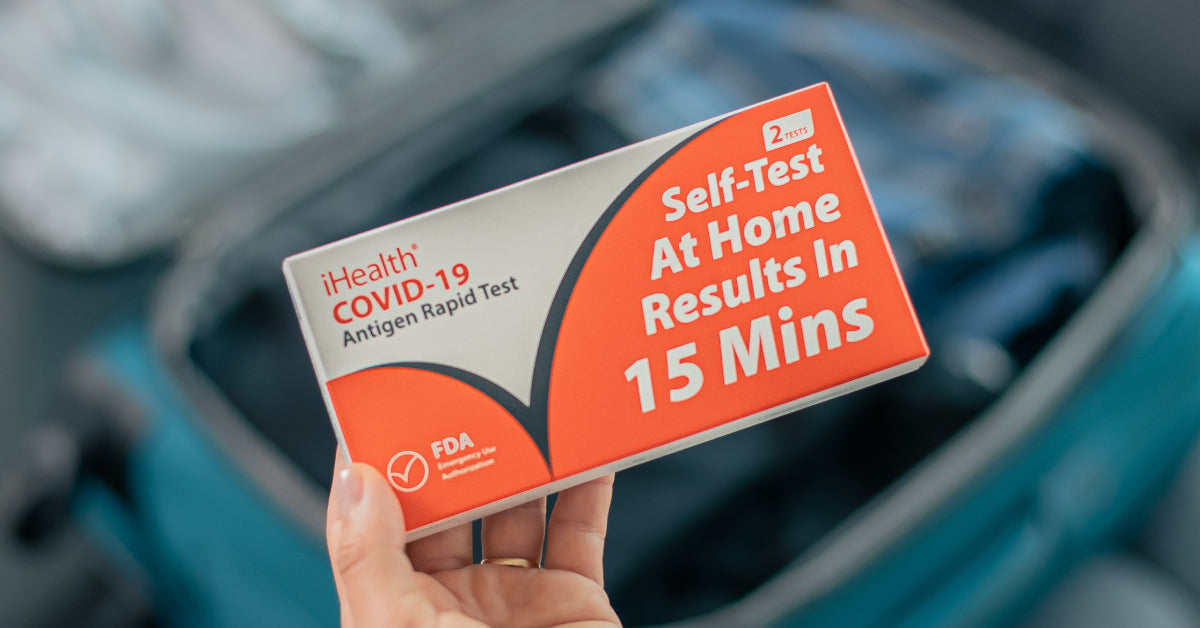
The PT3 is the pandemic-era hero that earned its keep: one-second readings from an inch away, a gentle vibration instead of a beep (sleeping toddlers and night-checks approve), and a price that’s drifted down to $16-25 street. Reviewers keep it at the top of the no-touch category year after year — its Amazon listing even advertises itself for nurses by name.
Use it for what infrared is for: fast screening of a warm-feeling kid at 2 a.m., checking the whole family in thirty seconds, triage. When a reading matters — dosing decisions, calling the pediatrician — confirm with the oral stick below, because every forehead device inherits the physics problem: sweat, ambient temperature and technique all move the number.
- 1-second, no-contact, vibration alert
- The reviewers’ no-touch consensus
- $16-25 street
- Screening-grade accuracy, like all IR guns
- Sensitive to sweat and room temperature
Braun ThermoScan 7 – The Clinic Classic
The ear thermometer your pediatrician’s office uses at home: pre-warmed tip (cold probes read falsely low — Braun’s fix is elegant), Age Precision fever thresholds that adjust for infants versus adults, and the tympanic site’s fundamental advantage — the eardrum shares blood supply with the temperature-control center, so it tracks core temp better than any skin surface.
$45-60 buys the standard ThermoScan 7; the 7+ adds a night light and silent mode for a bit more. Technique matters (straighten the ear canal, seat the probe), disposable lens filters are an ongoing minor cost — and for babies under six months, stick to the oral/rectal stick per every pediatric source.
- Pre-warmed tip — the accuracy detail that matters
- Age-adjusted fever guidance
- The clinical-standard home ear thermometer
- Lens filters to rebuy
- Technique-dependent; not for young infants
Vicks SpeedRead – The $10 Accuracy Champion
Here’s the plot twist the lab testing keeps delivering: the most accurate thermometer in the box stores is the boring $10 stick. In comparative testing the SpeedRead deviated just 0.2°F from reference — the best of the field — while the glamorous no-touch devices wobbled with the room’s climate. Oral, axillary or rectal, color-coded fever display, eight-second read.
This is the “deciding” thermometer of the two-device kit, the one whose number you chart and act on. Every nursing home-kit should contain one; at this price, one per bathroom. (Its sibling ComfortFlex, with the flexible tip, is equally respectable.)
- Best measured accuracy in lab comparisons
- ~$10
- Works for all ages and sites
- 8 seconds feels long with a squirming child
- No app, no glamour — just the right number
Exergen TAT-2000C+ – Best Temporal Artery Thermometer
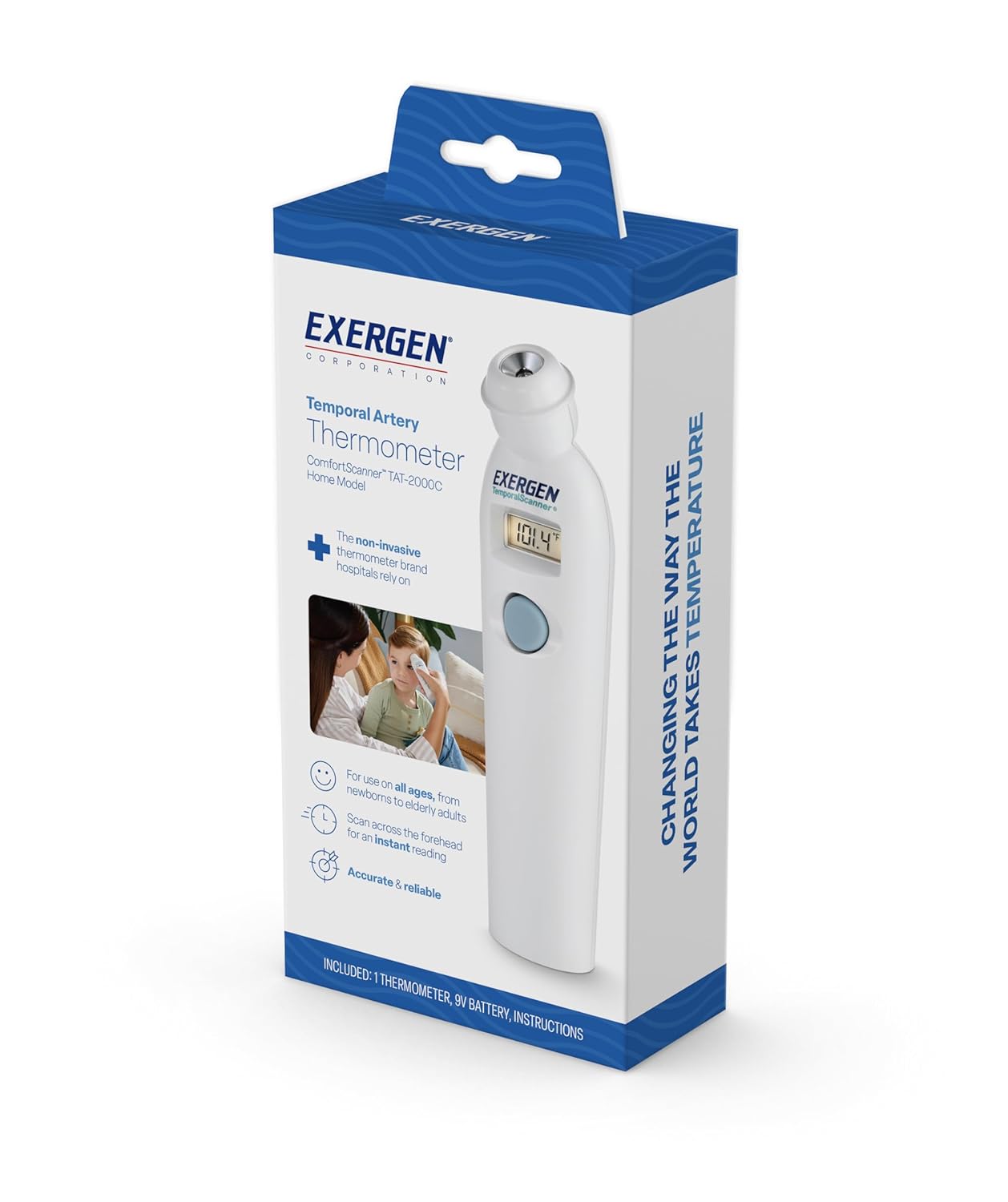
Exergen invented the temporal-artery swipe that hospitals adopted by the thousands, and the home version remains the best contact-forehead option — a step more repeatable than the no-touch guns because the probe actually touches skin and scans across the artery. The updated 2000C+ adds a soft-glow display, silent mode and an eight-reading memory; around $37-59 depending on where you catch it.
Fair notes: the swipe technique takes two tries to learn, and Exergen retired its professional TAT-5000 line in late 2024 — the home models carry the torch. For parents who hate ear probes and distrust air-gap infrared, this is the middle path.
- Hospital-pedigree temporal scanning
- Contact swipe beats air-gap IR for repeatability
- Night-friendly display and silent mode
- Swipe technique has a learning curve
- 9V battery, of all things
Kinsa QuickCare – Best Smart Thermometer
First, the news, since rumors swirled: Kinsa is alive — acquired by Healthy Together in early 2024, with the products still sold and the app still maintained. Good, because the idea remains the best in “smart” temperature: a proper oral/axillary stick whose app logs each family member’s readings, tracks symptoms, and offers age-based guidance, so at the 4 a.m. pediatrician callback you have an actual fever curve instead of a memory.
Around $25-30. For a nurse-parent who charts everything by instinct, this is the thermometer that charts with you.
- Fever log per family member — real triage value
- Proper stick accuracy underneath the app
- Company alive and supported
- Needs the app to shine
- Bluetooth pairing is Bluetooth pairing
The Accuracy Truth (What a Nurse Would Tell You)
Sites are not interchangeable, and the offsets are bigger than most fever thresholds: rectal and ear readings run roughly half a degree to a degree (°F) above oral; armpit runs the same amount below. Studies comparing devices against core temperature keep finding the same order — oral electronic sticks stay honest, tympanic follows with good technique, and forehead methods (contact or no-touch) swing widest, which is why researchers class the IR guns as screening devices.
The practical nurse’s protocol for home: screen with the fast gadget, confirm anything that matters with the stick, use the same device and site when tracking a fever over days, and tell the doctor which site the number came from. That last habit prevents more confusion than any hundred-dollar thermometer solves.
Conclusion
- The two-thermometer kit: iHealth PT3 to screen + Vicks SpeedRead to decide — under $40 combined.
- Households with kids and ear-probe tolerance: add the Braun ThermoScan 7.
- Prefer a forehead you can trust more: Exergen TAT-2000C+.
- Want the fever diary: Kinsa QuickCare.