A pulse oximeter is the simplest vital-signs tool in the house — clip, wait five seconds, read. But the market behind that little clip has changed more since our original guide than in the two decades before it: a pandemic put one on every nightstand, the FDA started confronting the accuracy gap on darker skin, and the first over-the-counter fingertip oximeter with genuine FDA medical clearance finally arrived.
So this update does something our old list of six lookalike gadgets couldn’t: it sorts the market honestly, by what’s actually verified. Because here’s the industry’s open secret — almost every cheap fingertip oximeter on Amazon is sold as a “sports and aviation” wellness gadget, a label that means the FDA has never reviewed its accuracy at all.
The Best Pulse Oximeters in 2026
- Zacurate Pro Series 500DL — Best Value
- Innovo Deluxe iP900AP — Best Features Under $40
- Nonin Onyx Vantage 9590 — Best Medical-Grade
- Masimo MightySat — Best Premium / FDA-Cleared OTC
- Wellue O2Ring — Best for Overnight Monitoring
First, Decode the Labels: “FDA Cleared” vs “FDA Registered” vs Nothing
Three phrases you’ll meet, in descending order of meaning. FDA cleared (a 510(k) number) means the device went through FDA review as a medical device — only a handful of consumer fingertip units qualify. “FDA registered” means only that the factory is on an FDA list; it says nothing about accuracy, though marketing loves the phrase. And the “sports/aviation — not for medical use” fine print on most cheap units means no regulator ever checked the numbers on that screen. It doesn’t make them junk — independent labs have validated some — but a nurse should know which tier she’s holding.
Zacurate Pro Series 500DL – Best Value Pulse Oximeter
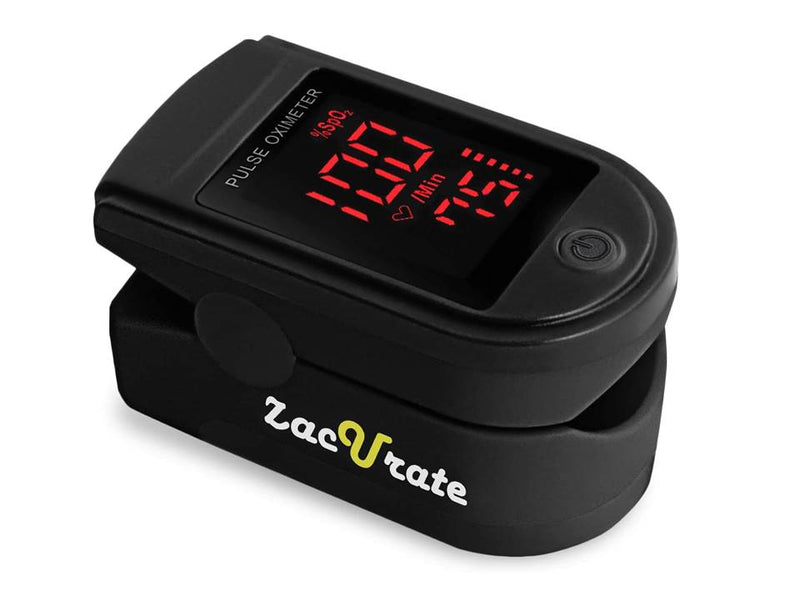
The 500DL is the long-reigning Amazon best-seller, and it earns this list’s value slot for a reason most cheap oximeters can’t claim: independent validation. UCSF’s hypoxia lab — the group behind the OpenOximetry project — tested it on 44 subjects, over a third with darker skin, and measured an error rate of 2.9%, inside the FDA’s own bar for medical devices, with minimal skin-tone bias.
For $20-30 you get SpO2 and pulse on a bright LED, batteries and a lanyard in the box, done. No perfusion index, no app, and formally it’s still a “wellness” device — but as a spot-check tool for a nightstand or a nurse’s bag, it’s the honest budget answer. AARP’s 2026 hands-on test named it best value, too.
- Independently validated by UCSF testing
- Minimal skin-tone bias in that data
- $20-30, batteries included
- Not FDA-cleared (wellness label)
- No perfusion index or app
Innovo Deluxe iP900AP – Best Features Under $40
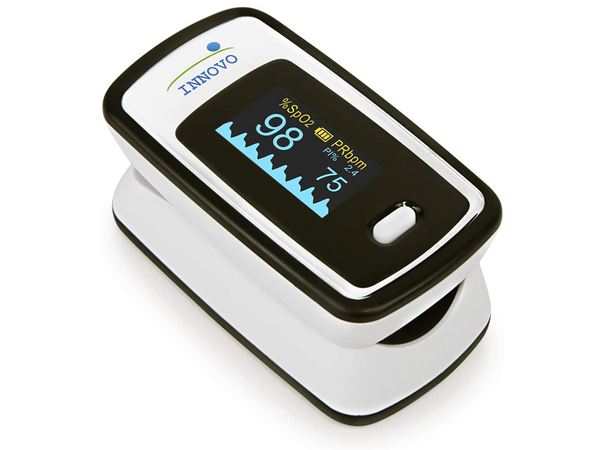
Spend about $10 more than the Zacurate and the Innovo adds the things a clinically-minded user actually wants: a perfusion index (so you know whether the reading is trustworthy — low PI is exactly when cheap oximeters lie), a plethysmograph waveform, an audible alarm with adjustable thresholds, and an OLED that flips to six orientations.
AARP’s 2026 test crowned it best overall with near-perfect scores, and the lab reviewers rank it the top over-the-counter unit. Same honest caveat as every unit in this price class: sports/aviation labeling, no FDA review. But if you understand what a PI of 0.3 means about the number next to it, this is the sub-$40 oximeter that respects you.
- Perfusion index + waveform — trust checks
- Adjustable alarm
- AARP 2026 best overall
- Still a wellness-label device
- No app or memory
Nonin Onyx Vantage 9590 – Best Medical-Grade Pulse Oximeter
The Nonin is what the difference between $30 and $237 buys: a genuinely FDA-cleared, made-in-USA professional instrument — the fingertip unit EMS services and clinics standardize on, and the current top pick of the major testing publications. A 2024 comparative study found it among the most accurate fingertip devices measured, including on darker skin, which is precisely where cheap units fail.
It reads reliably on cold fingers and poor perfusion, works for adults and kids, runs about 6,000 spot checks on two AAAs, and carries a four-year warranty. No Bluetooth, no waveform theatrics — just the number, dependably. For a working nurse who wants one oximeter she never has to second-guess, this is it.
- FDA-cleared, professional standard
- Proven accurate across skin tones
- Works on poor perfusion; 4-year warranty
- ~$237
- No app, no frills
Masimo MightySat – Best Premium Pulse Oximeter
Masimo makes the SET pulse-oximetry technology inside hospital monitors, and the MightySat brings it to a fingertip. Beyond SpO2 and pulse, it reads respiratory rate from the pleth waveform, perfusion index and pleth variability, on a bright rotating display with Bluetooth to Masimo’s app. In 2024, the MightySat Medical version became the first over-the-counter fingertip oximeter to earn full FDA clearance — with a calibration updated for performance across skin pigments.
At around $300 it’s a specialist’s tool: respiratory patients tracking trends, clinicians who want hospital-adjacent tech at home, data lovers. Reviewers’ one consistent gripe is the clunky app. If you just need a number, the Nonin above is cheaper and simpler; if you want the most physiological data a finger clip can produce, this is the ceiling.
- Hospital-grade Masimo SET technology
- Respiration rate, PI, PVI — the full picture
- Medical version is FDA-cleared OTC
- ~$300
- App is the weak link
Wellue O2Ring – Best for Overnight Monitoring
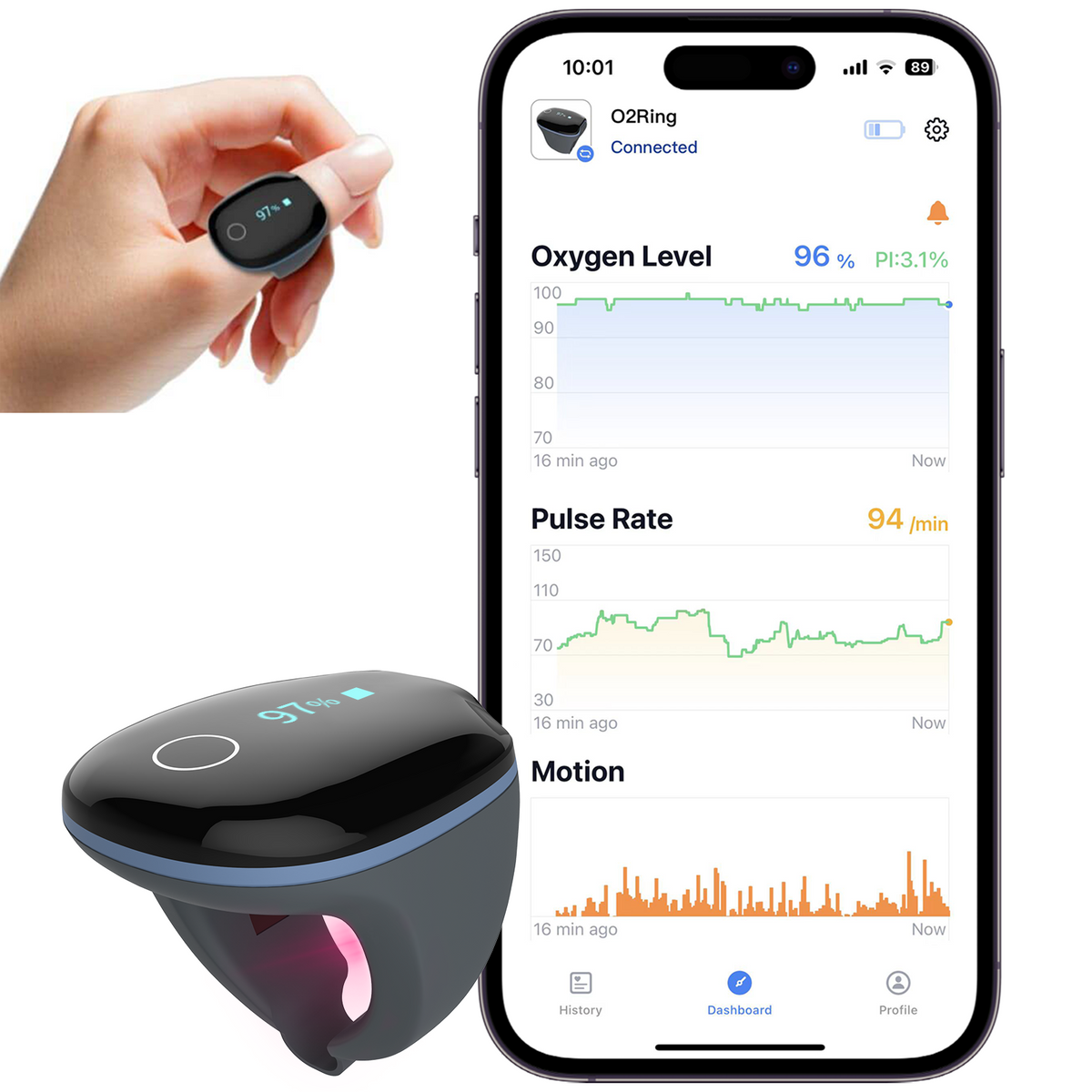
A fingertip clip answers “what’s my sat right now?” The O2Ring answers the more interesting question — “what happens to it overnight?” Worn as a soft ring, it records SpO2 and pulse continuously for 12-plus hours, vibrates on your finger when saturation crosses your set threshold, and produces morning reports detailed enough to bring to a sleep-clinic appointment.
Testers have found it tracking within a couple of percent of reference-grade Nonin equipment, and at $169-180 it’s become the default recommendation for suspected sleep apnea, home oxygen users, and — a use case this site’s readers know intimately — night-shift workers trying to understand what day-sleeping does to them. It’s a screening tool, not a diagnosis; but it’s the one that catches what a spot-check never will.
- Continuous overnight recording + reports
- Silent vibration alerts on the finger
- Tracks close to reference equipment
- $169-180
- Screening, not a diagnostic device
The Skin-Tone Problem, Honestly
Every nurse should know this one: pulse oximeters can overestimate oxygen saturation on darker skin — enough to miss real hypoxemia. The FDA formally warned about it in 2021, and in January 2025 issued draft guidance that rewrites how medical oximeters must be validated: study groups of at least 150 people with at least a quarter having dark skin tones, against roughly ten loosely-screened subjects under the old rules. As of this writing the guidance is still in draft — and it only applies to medical-purpose devices, which means the “wellness” units filling Amazon remain outside accuracy review entirely.
Practical takeaways: treat any single reading with clinical suspicion when it doesn’t match the patient in front of you; prefer devices with published cross-skin-tone data (the Nonin, Masimo and — via independent testing — the Zacurate above); and use the perfusion index, where available, as your reality check.
What About Our Old Picks?
The Santamedical, Concord, AccuMed and Acc U Rate units from our original guide are, remarkably, mostly still sold — they’re all variations of the same generic CMS-50 hardware, and none has FDA clearance or independent validation to point to. They’ll still clip on a finger and show a number; we just can’t call unverified clones “the best” anymore when validated devices exist at every price. Consider this list their retirement party.
Conclusion
- Nightstand spot-checks on a budget: Zacurate 500DL.
- Best sub-$40 feature set: Innovo iP900AP.
- One professional instrument, no second-guessing: Nonin Onyx Vantage 9590.
- Maximum data, hospital pedigree: Masimo MightySat.
- Overnight answers: Wellue O2Ring.
And the nurse’s postscript: whatever the gadget says, the patient wins the argument. A pulse oximeter is a data point — the assessment is still you.